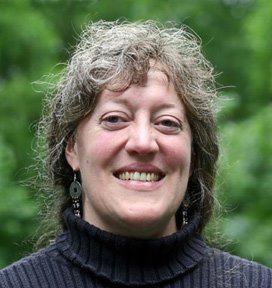
I am entering the realm of mom with legal adult offspring in four short months. I am so proud of my young woman, but it's hard to believe how quickly these years have flown by.
Last night, as I was about to pass out into total delirium (I've had a minor cold and am my normal sleep deprived self in spite of trying to baby myself so I can kick this runny nose and general foggy feeling) theater-girl came to ask for some help with her math homework. Thanks to NCLB (for those of you out of the US, that's the notorious "No Child Left Behind" laws that have come close to destroying our school systems due to mandatory standardized testing that makes administrators forget we are teaching children) she will be taking her HSPA exam in a month or two. HSPA is the exam given in NJ during Junior (2nd to last) year, and if you don't pass it, you don't graduate. It's at a basic high school math level; not all students are expected to work at college prep level.
Her math teacher (theater-girl is in Honors Algebra 2) started a review with them, and she was all frantic because she couldn't remember how to do some problems. Word problems, pretty much elementary math, but she was trying too hard to figure out some complicated algebraic formulas for problems that I'm pretty sure were meant to show that you could figure out how to solve a mathematical problem. They required (again, my interpretation) some estimating and some iterations of calculations to find solutions. One problem even had a grid for students to fill out to help them calculate the answer.
She knows how to do this math, now she's over-guessing herself and trying to find complex ways to solve basic problems. And she's SOOOO worried about passing this exam, because she heard the teacher say that if any students did not pass their GEPAs (the old 8th grade standardized exam), which theater-girl did not pass because the charter school wasn't teaching any math for the early years, then she might be in trouble. I'm not sure that's what the teacher meant, and theater-girl is forgetting that she got an A in her freshman HSPA prep course, which evaluates students and helps the high school place students in remedial math classes if necessary.
Today, since I'm home anyway, I'll be sending an email to her math teacher to let her know how panicked theater-girl is about the exam, and asking if she can send some practice problems home each week to help theater-girl prep and reassure herself.
I'm so proud to have daughters that care about their homework and doing well in school and who take pride in their work. It's balm for my soul, working, as I do, in a school system where lack of caring about all things academic is endemic with the students in the school. But holey moley, I really wish I had a panacea to help her calm down when she gets frantic. Reassuring her that I know she will do fine just makes her more hysterical and she screams, "You don't understand, Mom!!!"
Hmm ... the act of writing this has made me think about my basic volunteer counselor training. Maybe I just need to give her more empathy, just reassure her that I know how scary and overwhelming this is. I'm forgetting to do that.
Wednesday, January 28, 2009


Tuesday, April 22, 2008
Announcing your place in the family of things
…..Whoever you are, no matter how lonely,I just finished my yearly ritual of hiding eggs. It's bitterly cold out there, ten degrees below freezing, and not one sprig of green on our farm even though the forced forsythia is blooming away in our kitchen.
the world offers itself to your imagination,
calls to you like the wild geese, harsh and exciting--
over and over announcing your place
in the family of things.
~ Mary Oliver
This morning, I watched birds building a nest in the tree hole ten feet away from my bedroom window, far above the muddy brown spring lawn. When I wake up, I can see straight into that hole – where owls visit, squirrels search for storage, birds nest, and raccoons raid for anything they can find to make a meal. The raccoons are difficult to watch. When my daughters catch them in the act of climbing toward the nesting hole, the girls run flying out the front door with pots and pans and metal spoons, beating desperately to save the nestlings about to make a fine raccoon dinner. It hasn’t worked yet. The raccoons just blink down at them before finishing climbing up toward the tree hole. Even frantic thrusts with brooms don’t dislodge them from the tree; spring raccoons are hungry and more stubborn than the most passionately caring young girls.
We don't often have the vernal equinox and Easter on the same weekend, so it’s unusual to be hiding eggs in a sere landscape of unrelenting tan and brown. Normally, the yellow eggs hide in the forsythia, the blue eggs nestle among the first hyacinth, and the green eggs lie anywhere the spring onion grass is tall enough to hide them from casual observation. This year required some creativity – thankfully, the hemlocks had branches thick enough to hide the eggs up high where they were hard to find. Any trees with split trunks made good hiding places as well, especially if the splits were higher than eye-level for my youngest daughter.
I love this time of year, as the earth wakes up from her long hard freeze. Even though my sea of mud is frozen solid this morning, the sun streaming into my office is warm, and the air is alive with bird calls that we don't hear all winter. It was good to be alive this morning, even in the freezing cold.
---
Twice a year, we have an annual reunion of migrating geese. We wake up to the welcome morning chorus of twilight cacophony in the spring; welcome because the returning geese mean that the weather is changing. The days are longer, the sun is warmer, and even with ice on the pond and temperatures still below freezing, we know that spring can’t be far behind.
The fall reunion is warmly greeted, too. The appearance of the geese heralds a welcome relief from the summer heat as we head into autumn. The wild cry of the annual migration south is an echo of the wild cry in all of us, demanding that we remember our place in the circle of life.
Until we moved to the farm, I didn’t know that geese never sleep. The first year we spent here, we were sleepless for a good portion of the spring. Like wild children at a slumber party, they never stop their chatter and fussing. On those noisy nights, as the geese pass through town on their way north again, I am grateful to have a bedroom on the far side of the house from the pond.
On the evenings when I can walk out into the dark, to gaze at the full moon reflecting in a long shining path across the pond, sipping my tea slowly and reflecting on the day or planning the next day’s relentless endless list of tasks that can never be fully accomplished, I am grateful for the ceaseless chatter of the geese. That wild cry pulls at my heart, draws my attention away from the never-ending lists, and returns me to that endless place of rest that knows no time. Perhaps that’s why nature allows the geese to party all night … it’s her last chance to capture our attention, in the still of the night when no other sounds echo through our world. We listen to their wild cries, our imagination is captured, and we once again find our place in the world, unencumbered by the weights of caring and lists.
The Torture of Sisyphus
Living life as a full-time student at 51 years old has been challenging. There is never enough time in the day to complete all my school work, finish all my grading, help my children with their homework, and still have time to make half-hearted attempts to bring some order to the chaos that my life and home have become.
Simone de Beauvoir said, “Few tasks are more like the torture of Sisyphus than housework, with its endless repetition: the clean becomes soiled, the soiled is made clean, over and over, day after day,” and I barely try any more. I helplessly hope that my daughters won’t need endless years of therapy for the dirty jeans worn to school two days running, or the dust bunnies accumulating above our ankles, or the pasta and pizza we’ve eaten for the fifth day in a row. The youngest one rather enjoys that I never seem to remember to remind her to take showers. She doesn’t care that her hair looks more like strands of limp seaweed than human locks; I have learned to let go of my ideals and accept her feelings on comfortable grooming.
There are times when the chaos becomes so blatantly beyond reason that my psyche begins to unravel. It is at those points, when I am grasping for sanity and feeling it slowly slip through my fingers, that the farm will send a small gentle reminder, a hint of the sublime unknowable wonder in life, and I can stop my world, step off for a few moments to be still in myself and at one with the world around me. The gentle reminder becomes a grounding and centering that fills my soul with a renewed sense of self, remembering my place in the world.
One of those moments came to me as I sat in the car, working up the energy for what had become the Herculean effort needed to open the car door and walk into the house. It had been raining for weeks, the house was swimming in a sea of mud, and the sump pump was barely keeping up with the cataracts of water streaming through my basement. As I sat wondering where I would find enough strength to finish the long day ahead of me, a sudden flash of color, almost unnoticed, gently tugged at my attention. It was a bluebird, rosy-bellied and gorgeous, with brilliant blue back and tail, feeding on the newly sun-warmed insects beginning to emerge from the long wet winter.
As I sat watching, the bluebird was joined by a merry fat robin. Plump brown wrens joined the feeding flock. A few minutes later, a brilliant blue jay appeared above the throng of birds feeding in front of my car. I sat mesmerized for many long minutes, until the birds had their fill and all finally fluttered away. It was a breathtaking moment of spring.
Rainer Maria Rilke said, “Spring has returned. The Earth is like a child that knows poems.” I think often about what that means – a child that knows poems. As a child, I never liked poetry; I found it difficult to understand, long-winded, lacking in personal meaning. I began to understand poetry when someone introduced me to Mary Oliver, whose visual imagery captured my imagination and sent it soaring with the wild geese I read about in my first Oliver poem. I found the world offering itself to my imagination, calling to me “like the wild geese, harsh and exciting,” and I began to devour poetry. Since then, I have had the privilege of introducing many children to exciting poetry that fires their imaginations and calls them to the wild places within themselves. I think there can be no greater gift than to hear a child read her first poems to you, full of rich imagery, pulling at your despair and showing you your place in the family of things.
And so, like the child that knows poems, I slid from the car, rejuvenated by the avian dance of spring, opening my heart to the possibilities, finding once again within myself the pure joy and hope that offer relief from chaos -- my psyche made whole again.
Spring has arrived, and with it, a renewal of hope.
Simone de Beauvoir said, “Few tasks are more like the torture of Sisyphus than housework, with its endless repetition: the clean becomes soiled, the soiled is made clean, over and over, day after day,” and I barely try any more. I helplessly hope that my daughters won’t need endless years of therapy for the dirty jeans worn to school two days running, or the dust bunnies accumulating above our ankles, or the pasta and pizza we’ve eaten for the fifth day in a row. The youngest one rather enjoys that I never seem to remember to remind her to take showers. She doesn’t care that her hair looks more like strands of limp seaweed than human locks; I have learned to let go of my ideals and accept her feelings on comfortable grooming.
There are times when the chaos becomes so blatantly beyond reason that my psyche begins to unravel. It is at those points, when I am grasping for sanity and feeling it slowly slip through my fingers, that the farm will send a small gentle reminder, a hint of the sublime unknowable wonder in life, and I can stop my world, step off for a few moments to be still in myself and at one with the world around me. The gentle reminder becomes a grounding and centering that fills my soul with a renewed sense of self, remembering my place in the world.
One of those moments came to me as I sat in the car, working up the energy for what had become the Herculean effort needed to open the car door and walk into the house. It had been raining for weeks, the house was swimming in a sea of mud, and the sump pump was barely keeping up with the cataracts of water streaming through my basement. As I sat wondering where I would find enough strength to finish the long day ahead of me, a sudden flash of color, almost unnoticed, gently tugged at my attention. It was a bluebird, rosy-bellied and gorgeous, with brilliant blue back and tail, feeding on the newly sun-warmed insects beginning to emerge from the long wet winter.
As I sat watching, the bluebird was joined by a merry fat robin. Plump brown wrens joined the feeding flock. A few minutes later, a brilliant blue jay appeared above the throng of birds feeding in front of my car. I sat mesmerized for many long minutes, until the birds had their fill and all finally fluttered away. It was a breathtaking moment of spring.
Rainer Maria Rilke said, “Spring has returned. The Earth is like a child that knows poems.” I think often about what that means – a child that knows poems. As a child, I never liked poetry; I found it difficult to understand, long-winded, lacking in personal meaning. I began to understand poetry when someone introduced me to Mary Oliver, whose visual imagery captured my imagination and sent it soaring with the wild geese I read about in my first Oliver poem. I found the world offering itself to my imagination, calling to me “like the wild geese, harsh and exciting,” and I began to devour poetry. Since then, I have had the privilege of introducing many children to exciting poetry that fires their imaginations and calls them to the wild places within themselves. I think there can be no greater gift than to hear a child read her first poems to you, full of rich imagery, pulling at your despair and showing you your place in the family of things.
And so, like the child that knows poems, I slid from the car, rejuvenated by the avian dance of spring, opening my heart to the possibilities, finding once again within myself the pure joy and hope that offer relief from chaos -- my psyche made whole again.
Spring has arrived, and with it, a renewal of hope.
Lessons Learned
Sometimes the lessons learned from nature are profound enough to take my breath away. I find I am often an unwilling participant in those lessons, which frequently happen at the most inopportune times. Maybe that’s the point? Those are the perfect moments to learn a lesson, when we think we have neither the time nor inclination to learn a life lesson, thank you very much.
A recent lesson was due to a flock of Common Grackles … a really large flock of grackles, that just happened to be crossing the farm lane that leads from our house to the road. I was driving my kids to school and me to work, already running late. The birds created a most unwelcome and unexpected delay.
Grackles, evidently, like to make short flights of a few yards while feeding on fields in a large flock. They peck the ground; they rise up in a small cloud, and move past the other small groups to the next clear spot. Then the next small group moves on a few more yards. I drove up to the grackles just as the earliest small groups started to cross our lane. For the first few moments, my daughters and I enjoyed watching the small groups rise up in waves and move to a clear spot to start feeding again. We were mesmerized until I looked out over the field and realized just how many thousands of birds still had to cross.
I was already late. I had an important meeting. I didn’t have time for this distraction right now. Maybe I could just drive through; they’d only just started crossing the lane…
It took only a few seconds of internal anguish to decide that we were stuck. I risked running over too many birds if I tried to drive through them. So I put my car in park, and watched, impatiently consulting my watch many times, half-hoping that clock-watching would make it all happen faster. You know the old adage that a watched pot never boils, right? Well, watched grackles don’t feed any faster, either.
The ballet of the waves of grackles, perfectly timed to avoid each other, was awesome in its majesty. My reaction was visceral, remembering the Hitchcock movie The Birds, wondering if that many birds could crack my windshield. But no birds hit my car windows, even though it was difficult at times to see past the waves of birds flying overhead. I remembered reading accounts of how North America looked before European settlers arrived; how thick the woods were, how the sky would darken with the flight of birds in migration. I started paying attention to the details of the grackles in their single-minded pursuit of food.
As if by magic, my stressed soul calmed, and the day became richer and more tranquil. I was able to slow down and enjoy the moment, relax and stop stressing about the endlessly long list of to-do’s that never seemed to get shorter, to cultivate the Zen moments we need in our lives. They are so rare and precious, the eternal moments of time when I can forget about everything except the immediate present.
If not for the enforced sitting because of the passage of birds, I would have missed these moments. A few minutes earlier, and I would have missed the entire grackle ballet and driven away stressed and untouched by the lesson of the grackles. A few minutes later, and I would have missed the ballet and been that much more pressed for time, more fully stressed and less able to cope with the myriad details of a frenetic fast-paced life. The timing was perfect, nature had spoken, and I had been ready to listen.
Living on the farm has been magical for our family. We never know what unexpected gift will fly up in front of us, slowing down our day, allowing us to surrender with grace to the slower rhythms of nature. Grackle ballets appear as if by enchantment, soothing our frazzled souls. Life is good on the farm.
A recent lesson was due to a flock of Common Grackles … a really large flock of grackles, that just happened to be crossing the farm lane that leads from our house to the road. I was driving my kids to school and me to work, already running late. The birds created a most unwelcome and unexpected delay.
Grackles, evidently, like to make short flights of a few yards while feeding on fields in a large flock. They peck the ground; they rise up in a small cloud, and move past the other small groups to the next clear spot. Then the next small group moves on a few more yards. I drove up to the grackles just as the earliest small groups started to cross our lane. For the first few moments, my daughters and I enjoyed watching the small groups rise up in waves and move to a clear spot to start feeding again. We were mesmerized until I looked out over the field and realized just how many thousands of birds still had to cross.
I was already late. I had an important meeting. I didn’t have time for this distraction right now. Maybe I could just drive through; they’d only just started crossing the lane…
It took only a few seconds of internal anguish to decide that we were stuck. I risked running over too many birds if I tried to drive through them. So I put my car in park, and watched, impatiently consulting my watch many times, half-hoping that clock-watching would make it all happen faster. You know the old adage that a watched pot never boils, right? Well, watched grackles don’t feed any faster, either.
The ballet of the waves of grackles, perfectly timed to avoid each other, was awesome in its majesty. My reaction was visceral, remembering the Hitchcock movie The Birds, wondering if that many birds could crack my windshield. But no birds hit my car windows, even though it was difficult at times to see past the waves of birds flying overhead. I remembered reading accounts of how North America looked before European settlers arrived; how thick the woods were, how the sky would darken with the flight of birds in migration. I started paying attention to the details of the grackles in their single-minded pursuit of food.
As if by magic, my stressed soul calmed, and the day became richer and more tranquil. I was able to slow down and enjoy the moment, relax and stop stressing about the endlessly long list of to-do’s that never seemed to get shorter, to cultivate the Zen moments we need in our lives. They are so rare and precious, the eternal moments of time when I can forget about everything except the immediate present.
If not for the enforced sitting because of the passage of birds, I would have missed these moments. A few minutes earlier, and I would have missed the entire grackle ballet and driven away stressed and untouched by the lesson of the grackles. A few minutes later, and I would have missed the ballet and been that much more pressed for time, more fully stressed and less able to cope with the myriad details of a frenetic fast-paced life. The timing was perfect, nature had spoken, and I had been ready to listen.
Living on the farm has been magical for our family. We never know what unexpected gift will fly up in front of us, slowing down our day, allowing us to surrender with grace to the slower rhythms of nature. Grackle ballets appear as if by enchantment, soothing our frazzled souls. Life is good on the farm.
Appearing for a breathe of air!
I haven't had time to blog in such a long time - carrying 12 credits plus teaching 12 credits makes it challenging to find time for anything! The next three blog entries are from my English class - a small portion of what one day might be my memoirs! My professor asked me to try to get them published; this is the next best thing!
Robin
Robin
Sunday, March 23, 2008
Blessed Oestara

I just finished my yearly ritual of hiding eggs. It's bitterly cold out there, and not one sprig of green on our farm, even though the forsythia we forced is blooming away in our kitchen.
Last week, returning from my Praxis Exam, while sitting in my car finishing a phone conversation with an old friend, I watched a bluebird, a robin, a blue jay, and numerous wrens all feeding on insects right in front of me. It was a breathtaking moment of spring.
This morning, I watched some birds building a nest in the tree hole ten feet away from my bedroom window. When I wake up, I gaze straight into that hole; I have seen owls visiting, raccoons raiding, squirrels storing, and many birds nesting.
We don't often have Oestara and Easter on the same weekend, so I wanted to wish all of you, no matter what you worship or don't, a blessed spring (blessed= happiness and good fortune). I love this time of year, as the earth wakes up from her long hard freeze. Even though my sea of mud is frozen solid this morning, the sun streaming into my office is warm, and the air is alive with bird calls that we don't hear all winter. It was good to be alive this morning, even in the freezing cold.
“Spring has returned. The Earth is like a child that knows poems.”
~ Rainer Maria Rilke
Friday, January 25, 2008
Surviving a New Job and a Shakespeare Intensive
For approximately the last three weeks, I have been pondering why it is that I feel compelled to make work for myself, to never allow myself down time.
I was looking forward to a winter break from school. This last semester was hard – I’m tired, chronically sleep-deprived, and my poor daughters are probably wondering if I’ve abandoned them permanently. A solid month of no classes would have been good for me, given me a chance to catch up on sleep, laundry, housecleaning, remember what my daughters look like, all the things I’ve been ignoring since going back to school.
Instead, after a conversation with a professor, I decided to sign up for a winter session course so that I could apply for Middle School certification in Language Arts. Three credits in three weeks. Shakespeare’s The Tempest. Don’t get me wrong, I adore Shakespeare, and have been enjoying the chance to do an in-depth study of a play I was less familiar with. I’ve loved the work, the stretching of the mind, the exposure to a couple strange movies that I would never have seen otherwise.
Then half way through the first week of my Shakespeare Intensive, I received a phone call for a job interview, and got the job – teaching computer classes as the local community college. I love that work, too. The students are nice, the lessons are the kind of teaching work I want to do, so the experience will go a long way to helping me find a full-time teaching job. I’m having fun, I’m feeling useful, and the extra pay is really helpful even if it isn’t enough to live on.
But the combination of a 3-week intensive, plus a new job requiring syllabus writing, reading four textbooks, learning a new online blackboard system so I could set up for class, all amounted to overload, even for a work-a-holic. I’m living extreme life right now.
At the end of the week, as I take a break from writing my final Shakespeare paper, I am pondering while sipping my cup of hot chai latte. I wonder, what propels a person to work when a break is well deserved? What unconscious drive compels me to try harder, work harder, keep moving forward? What kind of Sisyphus-complex am I suffering from? Maybe it’s all a plot from my subconscious mind to successfully avoid cleaning my house!
I was looking forward to a winter break from school. This last semester was hard – I’m tired, chronically sleep-deprived, and my poor daughters are probably wondering if I’ve abandoned them permanently. A solid month of no classes would have been good for me, given me a chance to catch up on sleep, laundry, housecleaning, remember what my daughters look like, all the things I’ve been ignoring since going back to school.
Instead, after a conversation with a professor, I decided to sign up for a winter session course so that I could apply for Middle School certification in Language Arts. Three credits in three weeks. Shakespeare’s The Tempest. Don’t get me wrong, I adore Shakespeare, and have been enjoying the chance to do an in-depth study of a play I was less familiar with. I’ve loved the work, the stretching of the mind, the exposure to a couple strange movies that I would never have seen otherwise.
Then half way through the first week of my Shakespeare Intensive, I received a phone call for a job interview, and got the job – teaching computer classes as the local community college. I love that work, too. The students are nice, the lessons are the kind of teaching work I want to do, so the experience will go a long way to helping me find a full-time teaching job. I’m having fun, I’m feeling useful, and the extra pay is really helpful even if it isn’t enough to live on.
But the combination of a 3-week intensive, plus a new job requiring syllabus writing, reading four textbooks, learning a new online blackboard system so I could set up for class, all amounted to overload, even for a work-a-holic. I’m living extreme life right now.
At the end of the week, as I take a break from writing my final Shakespeare paper, I am pondering while sipping my cup of hot chai latte. I wonder, what propels a person to work when a break is well deserved? What unconscious drive compels me to try harder, work harder, keep moving forward? What kind of Sisyphus-complex am I suffering from? Maybe it’s all a plot from my subconscious mind to successfully avoid cleaning my house!
“Few tasks are more like the torture of Sisyphus than housework, with its endless repetition: the clean becomes soiled, the soiled is made clean, over and over, day after day”
~ Simone de Beauvoir
Monday, January 07, 2008
Silly Horoscope Meme Thing
For your reading pleasure - an interesting and somewhat bizarre meme that my friend Suna posted. It came from Barb Cooper's wonderful blog. I love Barb's description:
JANUARY:
Stubborn and hard-hearted.
Pay no attention to the fact that they seem to have been randomly generated by some astrological parody engine or a house elf or something.Here's my response, for January.
JANUARY:
Stubborn and hard-hearted.
This would especially be true when I am yelling at my children after they did something wrong. At least according to them. I am a serious contender for the worst-mommy-in-the-world, quite frequently.Ambitious and serious.
Uh-huh. That’s why I went back to school and massively back into debt as a single mom to learn how to be a teacher in a public school, working for peanuts.Loves to teach and be taught.
Well, ok, maybe this is why I went back to school.Always looking at people's flaws and weaknesses.
This is not why I want to become a teacher, and I spend all my waking hours most definitively not looking for flaws in people. However, that said, I do not hesitate to speak up when I do see weaknesses and flaws, and try to always offer suggestions for improvement. This would be for institutions, though, not people.Likes to criticize.
Well, I guess the last comment said it all. I try to criticize productively and kindly, if that helps.Hardworking and productive.
No arguments there. My children will happily attest to how unavailable I am due to the amount of time I spend on the computer (which translates to how much I’m working on school work). The upside to all of that is that my children are growing up with a model of how working hard in school leads to happiness and success. I hope. If I find a job.Smart, neat and organized.
BWAHAHAHAHAHAHA. Except for the smart part. Single moms in school and working do not have time to be neat and organized.Sensitive and has deep thoughts.
Yep, that’s why I’m reduced to responding to inane memes before blogger shuts down my blog due to neglect.Knows how to make others happy.
Not right now. I’ve spent far too long ignoring my friends while I cope with school and work. I hope they all forgive me.Quiet unless excited or tensed.
Well, ok. One item I might agree with.Rather reserved.
One of the most important ideas that I am trying to help my children understand is that life must be lived … that we need to throw ourselves into life without worrying about how others think of us … that reserve is for banks, not humans.Highly attentive.
Not when I’m reading. Again, my children will happily attest to this. Not when I’m in front of my computer, either. (Those two actions kind of go hand-in-hand right now, but my children haven’t figured that out yet.) I prefer to think of it as benign neglect which helps them develop their own creativity!Resistant to illnesses but prone to colds.
What does this have to do with my birth month, anyway? Did the person who came up with this list really believe that all January babies are more prone to colds? Now that I’m an accomplished user of natural remedies, none of this is true, anyway.Romantic but has difficulties expressing love.
Nope. If I can’t find a way to say it orally, I usually find a way to say it in writing. Anyway, how could I make others feel happy but not know how to express my love???Loves children.
Only since I became a mom. That would discount the first two thirds of my life!Loyal.
Yes.Has great social abilities yet easily jealous.
No. Really, really no. I don't think I have a jealous bone in my body.Very stubborn and money cautious.
Again, my children might claim the stubbornness. However, they are more worried about money now that we’re poor than I am.That was interesting. A bit bizarre. I would truly love to know how this meme originated.
Friday, December 14, 2007
... the best way out is always through
“… the best way out is always through.”
~ Robert Frost (1874–1963)
The particular friends who wrote are in the middle of job woes. Too little work, one of them, too much work, the other. How ironic that they can’t share the load somehow, evening the balance for both of them.
It’s caused me to reflect on my own sanity, as I finish the semester, and square off to face the mountains of ignored laundry, the bedrooms that look like the aftermath of World War III, and the blessedly clean kitchen, living room, and dining room, thanks to some amazingly kind and generous daughters who took charge last weekend while I had the flu and set them to right.
We have too much to do, too. There’s no time to put up the tree. We have cookies to bake for teachers, presents to make for family and friends, and I need to sort through the boxes that have been delivered in the last two weeks and make sure that I have presents for everyone. The class ring that I bought for my daughter, assuming it would arrive in time for the holidays, I now find out won’t be delivered until February, so I had a last minute scramble for a small present or two for her. I need to make sure I have something for everyone, including my poet child with the early January birthday!
Somehow, except for the physical stresses of sleep deprivation, combined with the constant uncovered hacking and sneezing full in the face by preschoolers, which resulted in a case of the flu this week, I have managed to escape the physical complaints that my friends are experiencing. I spent a few evenings wondering how I’d make it, when too many projects loomed with so little time left. I could have devolved into a puddle of self-recriminating anguish over the lost two hours while I enjoyed a movie with my daughters last week.
Somehow, I have managed to hold onto my sanity. Or, maybe I’ve lost it altogether and just *think* I’m sane … the common definition of insanity, after all, is the belief that one is sane in spite of a clear departure from reality that everyone else sees. Eeek. I hadn’t thought of that until just now, writing these words. Well, I will choose, since I’m questioning now, to believe that the very act of wondering if I have truly and finally gone around the bend validates my very clear and constant hold on reality.
I am crediting my sanity to my fledgling ability to live in the moment. It developed, somehow, in the midst of divorce, job loss, re-entry into the world of non-traditional graduate student, and sheer survival. If I made it through one more day, then I’d done well. I thought only as far as the next step – finish the paragraph, get the laundry load done that was most critical, wash the dishes so we could eat breakfast the next morning. I found, instead, that I have joy, success, love to look back upon, and my hope for tomorrow lies alive and well in my heart.
The best way out is always through … indeed.
For it is life, the very life of life.
In its brief course
Lie all the verities and realities of your existence:
The bliss of growth;
The glory of action;
The splendor of achievement;
For yesterday is but a dream,
And tomorrow is only a vision;
But today, well lived, makes every yesterday
a dream of happiness,
And every tomorrow a vision of hope.
Look well, therefore, to this day.
~ Author Unknown, Sanskrit Proverb
Monday, November 26, 2007
Petty Annoyances
Drastic and chronic lack of sleep has a habit of creating large emotions from petty annoyances. A perfect example would be the routine closing of my garage door while I’m driving my eldest daughter down to the bus, by the woman who comes to feed the barn cats (not mine) every morning.
Most mornings, I walk to the bus with all my daughters. The eldest is in high school, and we don’t have much private time to talk. I value these quiet times, when she opens up and tells me about her life, her feelings, her concerns, her joys. She’s a morning person, ready to talk as soon as she wakes up; I’m a night person, and usually struggling for alertness through my cup of morning coffee. My silences joined with her alertness lead to openings that perhaps wouldn’t have a chance to come to fruition later in the day when I gear up for the daily whirlwind.
On the rare days that we drive down, it’s almost always because it’s snowing or raining hard enough to make us both miserable. So I drive her down, and we sit for a few minutes while waiting for the bus. I miss the walking those days, since I don’t have time for exercising the rest of the day, and we still get in a little talk during the five minutes or so while we wait for the bus.
I come home in a haze of not-quite-wakefulness, enhanced by the glow of a teenaged sharing, to find that I need to climb out of my car in the pouring rain or blizzard, to open the garage door again. And there goes the magic of my quiet contemplative mood. It takes me hours to regain my equilibrium.
This is a new development. She just started to come feed the cats. She’s a retired woman, given a home by my landlords on a different house on the property while she helps care for her adult daughter struggling with cancer. It was the only way she could move back in-state to help care for her daughter, and my landlords are doing an amazing thing, giving her a place to live in return for feeding the stray cats and barn cats and painting fences. At any other time, I would be filled with compassion for the situation this woman is in.
But on those icy cold mornings, as I plow through the snow, and curse and struggle to heave open the barn door to get my car back inside so it doesn’t layer with two inches of snow before I leave for work, I lose all compassion, all empathy, all peace, and burn with resentment and frustration. Why doesn’t she get it? The door is always closed, I only leave it open when I drive my high school daughter down. She knows what I’m doing; we’ve conversed about it other times as I walk back to the house as she drives up the driveway and she asks what I’ve been doing out and about so early. It’s a really heavy sliding barn door, requiring major heaving effort to open and close the door. I don’t like getting snow and rain down my neck, which is why I left the door open to begin with, so I could just drive right back in and dash for the house.
So why is she compelled to close that door on the mornings that I drive down? Why is she arriving earlier and earlier? She used to come when my younger daughters and I were running around getting them off for the day, getting myself off for the day. She’d park in the driveway so I’d have to wait for her to finish and back out, in order to get out myself. I guess I could be grateful she’s not parking there while we’re rushing out to get the other two on the bus and me to work.
And why is it that such a petty little annoyance can wreak such havoc with my morning, unsettling me to this degree? Where is that calm collectedness that keeps me centered all the rest of the day as life whirls around me and autistic children kick me and job frustrations chip away at my savings and heat spirals out of my leaky old barn house? Why is it so hard to cope with such a tiny thing?
Most mornings, I walk to the bus with all my daughters. The eldest is in high school, and we don’t have much private time to talk. I value these quiet times, when she opens up and tells me about her life, her feelings, her concerns, her joys. She’s a morning person, ready to talk as soon as she wakes up; I’m a night person, and usually struggling for alertness through my cup of morning coffee. My silences joined with her alertness lead to openings that perhaps wouldn’t have a chance to come to fruition later in the day when I gear up for the daily whirlwind.
On the rare days that we drive down, it’s almost always because it’s snowing or raining hard enough to make us both miserable. So I drive her down, and we sit for a few minutes while waiting for the bus. I miss the walking those days, since I don’t have time for exercising the rest of the day, and we still get in a little talk during the five minutes or so while we wait for the bus.
I come home in a haze of not-quite-wakefulness, enhanced by the glow of a teenaged sharing, to find that I need to climb out of my car in the pouring rain or blizzard, to open the garage door again. And there goes the magic of my quiet contemplative mood. It takes me hours to regain my equilibrium.
This is a new development. She just started to come feed the cats. She’s a retired woman, given a home by my landlords on a different house on the property while she helps care for her adult daughter struggling with cancer. It was the only way she could move back in-state to help care for her daughter, and my landlords are doing an amazing thing, giving her a place to live in return for feeding the stray cats and barn cats and painting fences. At any other time, I would be filled with compassion for the situation this woman is in.
But on those icy cold mornings, as I plow through the snow, and curse and struggle to heave open the barn door to get my car back inside so it doesn’t layer with two inches of snow before I leave for work, I lose all compassion, all empathy, all peace, and burn with resentment and frustration. Why doesn’t she get it? The door is always closed, I only leave it open when I drive my high school daughter down. She knows what I’m doing; we’ve conversed about it other times as I walk back to the house as she drives up the driveway and she asks what I’ve been doing out and about so early. It’s a really heavy sliding barn door, requiring major heaving effort to open and close the door. I don’t like getting snow and rain down my neck, which is why I left the door open to begin with, so I could just drive right back in and dash for the house.
So why is she compelled to close that door on the mornings that I drive down? Why is she arriving earlier and earlier? She used to come when my younger daughters and I were running around getting them off for the day, getting myself off for the day. She’d park in the driveway so I’d have to wait for her to finish and back out, in order to get out myself. I guess I could be grateful she’s not parking there while we’re rushing out to get the other two on the bus and me to work.
And why is it that such a petty little annoyance can wreak such havoc with my morning, unsettling me to this degree? Where is that calm collectedness that keeps me centered all the rest of the day as life whirls around me and autistic children kick me and job frustrations chip away at my savings and heat spirals out of my leaky old barn house? Why is it so hard to cope with such a tiny thing?
“Be master of your petty annoyances and conserve your energies for the big, worthwhile things. It isn't the mountain ahead that wears you out - it's the grain of sand in your shoe.”
~ Robert Service
Thursday, November 15, 2007
Courtesies
“Courtesies of a small and trivial character are the ones which strike deepest in the grateful and appreciating heart.” ~ Henry Clay (1777-1852), politician and orator
Last night, my eldest daughter and I had an interesting conversation about how to succeed at school. She’s frustrated with one teacher whom she feels plays favorites. I can remember that same feeling, and how horrible it felt. Ironically, it was a teacher teaching the same subject.
I didn’t have many words of advice to give my daughter. It’s a dilemma that I never figured out how to solve when I was in high school, either. All I could do, in the end, was recommend that she be herself, be nice, and ignore the favoritism. If nothing else, she can walk away from the situation knowing she did nothing wrong.
And who knows. Continuing to be straight with this teacher,
 offering her the same courtesies and acknowledgments that she gives all her other teachers may pay off in the end. Perhaps one small courtesy will strike deep.
Tuesday, November 13, 2007
Kootchie Koo!
“At times our own light goes out and is rekindled by a spark from another person. Each of us has cause to think with deep gratitude of those who have lighted the flame within us.”Today, I worked with Jake. He is autistic, plus other special needs. He is five and a half. He is finally learning how to use the potty. He is slender, lightening fast, and has better gross motor skills than many nine-year-olds that I know. Jake has very few words, and his ability to communicate is sketchy, at best.
~ Albert Schweitzer (1875-1965)
I worked with him at his house this afternoon. We worked on word fluency. He can look at a picture of a ball, and it might take him 10-15 seconds of concentrated effort to pull the word “ball” out of his mind and across his tongue. He might say “throwing” first, because that’s the function he has associated with that item. He might say the color, too, or the shape, or the last noun he named, while struggling to recall and pronounce that nebulous name “ball”.
Jake will scream loudly, like a fire siren, when he can’t think of words to tell you his needs. Or he will hit. Or he will throw himself down on the ground and curl into a ball. Sometimes he will sit and quietly weep.
Jake also has flashes of brilliance. Not intellectual brilliance – the kind of brilliance that lights up his face and explodes my heart with joy. They happen sometimes when he successfully pees on the potty. He looks up, smiles from the depths of his being, and my heart just melts. He knows he’s done something remarkable.
Today, we played tag. It was a strange silly version of tag that perhaps only an autistic child would enjoy. It started after he came downstairs with a pair of socks on, with a hole in the heel of one foot. When I saw him poking at the hole in his heel, I stuck my finger in the hole and said, “kootchie, kootchie, koo!” He shrieked and hid his foot under his other leg.
Part of my challenge as an ABA therapist is to interpret his shrieks, and give him words for communicating. It’s a guessing game at best. Was he shrieking in delight or frustration? I tried, “No tickle, Slaw,” but he didn’t respond. Usually, if I guess a close sentiment, he parrots my words back. Hmmm – he wasn’t minding the tickling. Was he perhaps enjoying the game? I tried again, poking his heel and kootchie koo-ing. He shrieked again, and I said, “More, Slaw!” No response again. But a giant smile this time.
Next thing I knew, we were racing back and forth across the basement floor, with Jake laughing big belly laughs, gales of delight! When I caught up to him, usually when he threw himself headlong onto the bed in the corner of the room, he would wave his feet in my face, and then try to hide the foot with the holey sock before I could poke my finger in again.
When I fell down in exhaustion, I heard some magical words. “Get you!” That was Jake, asking me to chase him again. I told him, “Get me, Slaw!” and he shouted back, “Get me!” So off we raised again, and again, and again, until finally I fell down on the floor again in exhaustion, this time pretending to be asleep.
This time, from across the room, I heard, “Get me, Slaw!” While I snored away, I heard, “Get me, Miss Slaw!” and finally, “Come get me, Miss Slaw!”
That’s a five word sentence! Enunciated correctly, with joy, appropriately used! In Jake’s case, almost miraculous.
As I snored on, still pretending to sleep, I heard, “Wake up! Wake up, Slaw! Come get me, Slaw!” With that, as Sleeping Beauty wakes with a kiss from her prince, so Jake’s words were as kisses to my ears, and off we raced, with Jake shrieking in joy, and my heart singing from a small step toward human contact.
Life can be very good.
Sunday, November 11, 2007
Lectio Divina
“To be nobody but yourself in a world which is doing its best day and night to make you like everybody else means to fight the hardest battle which any human being can fight and never stop fighting.”A friend just suggested that perhaps I could use my writing or journaling as my own personal lectio divina tool, to help me find my place in the world. I had to look it up, having no idea what a lectio divina tool might be. The answer I found sounds appealing. I will try a commitment to write every day for the rest of the month, in my own small fashion participating in NaNoWriMo, since I don’t have enough time to try to write 50,000 words this month on top of graduate school and parenting work.
~ e. e. cummings
Lectio is reverential listening; listening both in a spirit of silence and of awe. We are listening for the still, small voice … that will speak to us personally - not loudly, but intimately. In lectio we read slowly, attentively, gently listening to hear a word or phrase that is the word for us this day.
Translating that to my writing means that I must enter a place of stillness in my writing, and be open to the words or messages that might come to me. I have often described my writing as an opening, almost a channeling of something outside of myself. When my best writing comes out, I don’t feel in control of it. Rather, I seek to ride the torrent of words that flows through me in the way that a sailor finds the sweet spot in the wind to push her sailboat to the maximum, finding a delicate balance between over-steering and losing the wind or riding so high that the wind flips the boat over.
Once we have found a word or a passage that speaks to us in a personal way, we must take it in and “ruminate” on it. We must take in the words - that is, memorize them - and while gently repeating them to ourselves, allow the words to interact with our thoughts, our hopes, our memories, our desires. This is the second step or stage in lectio divina - meditatio. Through meditatio we allow those words to touch us and affect us at our deepest levels.
I have fallen out of a habit of meditating, lately. I have been busy, thinking, creating, writing, reading, job searching, learning new ABA (Applied Behavior Analysis) techniques, pondering what worked and what didn’t in my work with autistic children. I have been researching for projects, researching for job ideas, thinking hard about where my place is. Perhaps I need to spend more time in reflection and meditation, thinking about the still, small voice that speaks to me.
The third step in lectio divina is oratio - prayer: the offering of parts of ourselves that we have not previously believed wanted. In this we allow the words that we have taken in and on which we are pondering to touch and change our deepest selves. In this oratio, we allow our real selves to be touched and changed by the words.
Perhaps, in taking the time to write regularly, to think deeply about the words I write, and to allow myself to be touched and changed by those words, I will understand the path my life needs to take.
"The secret of success in life is for a man to be ready for his opportunity when it comes."
~ Benjamin Disraeli
Wednesday, November 07, 2007
Tyranny
"Of all tyrannies, a tyranny sincerely exercised for the good of its victims may be the most oppressive. It would be better to live under robber barons than under omnipotent moral busybodies. The robber baron's cruelty may sometimes sleep, his cupidity may at some point be satiated; but those who torment us for our own good will torment us without end for they do so with the approval of their own conscience."
~ C. S. Lewis, English essayist & juvenile novelist (1898 - 1963)
How ironic, that there is a great movement afoot to ban children and families from viewing the movie "Golden Compass" or reading Philip Pullman's wonderful series, His Dark Materials. I've received emails telling me the book is anti-Christian, that the author, an atheist, is attempting to recruit children to atheism. It's true, Pullman is a self-avowed agnostic (see his website), but I found the series incredibly spiritual and profound in its questions about the meaning of life and how we should aspire to live.
The banning email in question refers to the Narnia series, the great work that C. S. Lewis wrote for children, as an example of what Pullman is trying to destroy. And yet, Lewis abhorred censorship, as evidenced by his quote above.
I plan to watch the movie when it's released. We already own the books, and love them.
Friday, November 02, 2007
Technology and Education
“It is not the strongest species that survive, nor the most intelligent, but the ones most responsive to change.”This semester, I am taking a class called Computers as a Teacher’s Aide. It’s been somewhat interesting.
~ Charles Darwin
At the beginning of the class, the professor asked us what would make the class boring for us. I responded by writing that if the class was geared to absolute neophytes in MS Office products, which is what we’re learning about, I would be bored. Sadly, most of the students (most of whom are under 25) are neophytes, and can’t keep up with the projects or lectures in class. Luckily, I learn at least one new thing each class, which keeps my attention engaged enough to be able to stay awake through class. This week, I learned about that cool little marker tool in PowerPoint, that you can use to mark up slides in the middle of a presentation. Never noticed that before.
I’ve been pondering why I am the most technologically literate person in the class, as a 50-year-old returning non-traditional student. I am shocked at how non-proficient the younger students are, since in my family, the younger the sibling, the more technologically proficient we grew to be. I didn’t have computers in the home before I hit young adulthood. My youngest brother grew up with an Apple 2c.
Taking this class has led me on a time-consuming and fascinating path to discovering exactly what is out there on the new internet: a wealth of tools that I never dreamed about, a Pandora’s Box of ways for my children to get themselves in trouble without education and supervision (which NONE of them are receiving at school) and an amazing array of ideas that can revolutionize education.
And what are the teachers that I meet saying about these tools? “Why do we need them? Children learn just fine without them.” or “It’s just too much trouble to learn how to do this.” And our children are merrily marching off to a future that we can’t even begin to dream of, and will work in jobs that haven’t yet been created, doing work that hasn’t yet been invented, using tools that are unimaginable to us today.
Today, I got lost in cyberspace, reading a wiki on education and technology.
Tomorrow, and for the rest of my days as a teacher, I will be thinking about the implications of all the new technology on how I will teach. I am already writing a paper on how to use wikis to facilitate group writing projects.
I am glad to be alive in today’s world, with all its glorious potential.
“The illiterate of the 21st Century will not be those who cannot read and write, but those who cannot learn, unlearn, and relearn.”
~ Alvin Toffler
Friday, October 26, 2007
The Osprey
We must learn to respect others and their boundaries. Osprey comes into our lives to specifically teach us that those we want to treat with disdain or contempt should be treated with respect regardless of how we feel. We might be drawn to fierce personalities, and then clash with them; osprey energy teaches us that we are able to maintain our integrity but taking a step back and practicing respect.
~ wildspeak
Nature, when we pay attention, always finds a way to teach us a lesson.
This week, my middle daughter’s class had an upset. A female classmate experienced an incident of sexual harassment from one of her classmates, and the entire class was unhappy about both the incident and the apparent lack of action by the school administration to this particular incident, especially in contrast to previous similar incidents where boys were suspended. Two days later, the same class went on a 3-day, 2-night camping trip. I drove the students to their site, and got to hear (and participate) in an interesting discussion about their feelings.
The feelings were strong, causing some vengeful behavior and reactions verging on an old-fashioned shunning. I was a little surprised by the vehemence of reaction on the part of the boys. Some of the parents (myself included) were concerned that they would copy-cat the action and all the girls would experience an escalation of undesirable behavior. These are young adolescents, in a mixed class of 12-14 year olds. Young adolescents are not particularly known for their thoughtful behavior.
Instead, the boys reacted with strong disapproval. Ok, partly because the entire class was forbidden to play tag for an undetermined amount of time. None-the-less, I was surprised and pleased to see that the girls wouldn’t need to fend off unwanted attention all through the camping trip. Instead, the boy needed to fend off unwanted and heavy-handed censure. It’s too bad; had the administration acted as they had for similar previous actions, perhaps the boys in the class wouldn’t have felt the need to impose their own censure. Instead, I think the boy experienced much worse peer-punishment.

I dropped off the students at their camping site, and returned the following evening to chaperone for the night. After arriving at the campsite, the students and teachers pointed out an osprey who had taken shelter at the edge of the lake where they were camping and hadn’t moved all day. About an hour after we returned to the site, the osprey finally moved position, flying to a branch even closer to the campsite, as though to make sure the students noticed it was still there. They did and shrieked with delight to see it even closer.
One of the other parent chaperones went home for some supplies and to relieve his partner while she taught an evening course, and returned with the above quote on the significance of the osprey as an animal totem. When one of the teacher guides read the statement to the class, they responded with deep and profound silence for an incredibly long time. I was moved, not only by the statement, but by the way the class thought long and hard about the message the osprey was delivering to them.
Nature, when we take the time to see and listen, can teach us how to be better humans.
Saturday, September 22, 2007
A Prayer of Sorrow
We have forgotten who we are.
We have alienated ourselves from the unfolding of the cosmos.
We have become estranged from the movements of the earth.
We have turned our backs on the cycles of life.
We have sought only our own security,
We have exploited simply for our own ends,
We have distorted our knowledge, we have abused our power.
Now the land is barren,
And the waters are poisoned,
And the air is polluted.
Now the forests are dying,
And the creatures are disappearing,
And the humans are despairing.
We ask forgiveness.
We ask for the gift of remembering.
We ask for the strength to change.
~ U.N. Environmental Sabbath Program
Yesterday, I substituted in a local middle school. I had heard that the school could be challenging. It wasn’t; they were just normal middle school kids – that’s challenging enough.
Did they try to push the envelope? Of course they did. I used the excuse, while on the phone with my mom later while wishing her a happy birthday, that I expected them to act that way, that we all did with substitute teachers while growing up. And as the words left my mouth, I felt a twinge of regret that it was so, that I was even expecting that the students would try to see how far they could go.
I know that it’s partly because they don’t know me. They haven’t had a chance to develop a level of mutual respect and trust with me. And I wonder what it says about our educational system, that for generations now, we have assumed that we should begin our relationships with teachers with a sense of distrust, suspicion, an unwillingness to enter into a relationship of accord, even with strangers who enter the classroom to help for a day when a teacher need be elsewhere.
Somewhere in a deep string within my body, an atonal chord has been plucked. It’s all twisted up with knowledge from my adolescent psych class about how young adolescents are taking steps into adulthood, and the twisted way we in the western world have kept them in babyhood and helplessness for far too long. We want to shelter our children all our lives – I know my mom feels so helpless for me right now, and wishes more than anything that she could magically make a job appear, or magically heal the breach that occurred in my marriage.
We don’t give our adolescents the ability to grow into adulthood gracefully or meaningfully, so they find other ways to assert their independence. No lion to overcome? Well, then, let’s overcome the traffic laws and policemen trying to enforce them, or let’s overcome the teachers in school, or let’s overcome the boredom of enforced infancy for far too many years, as our parents deny their children the ability to wander in the woods, learn from their own mistakes, or head off to college on their own….
That chord reverberated wrong in my heart because at some deep level, I know that we need to have respect for elders. Some of my most amazing conversations and insights have come from casual conversation with my elders. And in our twisted Western world, elders aren’t respected, revered, trusted. They are shunted off into homes with caretakers, where we can’t see them, where we don’t need to face our discomfort with their physical ailments, their slipping minds, their slowing ability to keep up with our insanely frenetic pace of life.
I’m not sure what the answer is. This reading struck another strong chord in me, as I read it this morning. We have truly lost touch with our world, physical and emotional. While the words reflect on the environmental damage done to our world, to me, they also reflect the damage we have done to our psyche as humans, when we stopped being oriented toward community, and started orienting ourselves to self above others.
Perhaps that’s the explanation for why children (and adults) no longer have a deep and abiding respect for elders. Perhaps that’s why we suffer from alienation and powerlessness. Perhaps we need to think about others again, to remember how it is to put others first, to live unselfishly, to work for the common good above our own needs.
It’s a nice thought.
Thursday, September 13, 2007
Irony
In a completely rational society, the best of us would aspire to be teachers and the rest of us would have to settle for something less, because passing civilization along from one generation to the next ought to be the highest honor and the highest responsibility anyone could have.
~ Lee Iacocca
This semester, I’m taking a course in literacy for upper elementary students. I find it rather ironic that my current readings for class are telling me that the best and latest research on how we learn is coming from corporations. They’re doing research to help their adult employees learn quickly and effectively to keep up with all the rapid changes in the world. And the research is trickling down into schools, allowing teachers to help their child and adolescent students learn more effectively, too.
Yesterday, while browsing school websites, looking for open teaching positions, I came across a district that was promised money for school improvements, then had their funding yanked. This is an Abbott district, which in NJ means that the district is under-funded and under-achieving, academically-wise. I find myself wondering how we managed to get to this place where our children come absolutely last in the efforts of our politicians. I’m pretty sure that they care about their children, their grandchildren, their nieces and nephews, their neighborhood children. So why can’t they see their way clear to making legislation that supports our children above the interests of corporations and greed?
It’s a sad indictment on our country that we aren’t spending enough money on our schools to help children learn effectively.
Friday, August 31, 2007
Class
Oh. My. Goodness.
I think I have finally figured it out. The reason for the lesson the universe is insisting I learn right now. The one that has made sure I’ve endured trial after trial after trial.
For a while, I thought maybe I needed to learn grace under pressure, or how to allow stress to just flow through my body without affecting me, or something zen-like that would help my coping skills. I was, after all, a rather reactionary teen, easily erupting into flames upon the slightest provocation. My brothers called me Lucy (from Peanuts) growing up because I was so bossy. And there were many, many slammed doors during my adolescence. So I felt as though perhaps I was enduring a bit of “what goes around, comes around” kind of same-lifetime karmic debt. Except it wasn’t my own adolescents reacting that way, causing me the trials and tribulations of what my parents had to endure during my adolescence. It was life from outside attacking from all quarters.
I had a wonderful conversation yesterday with a friend from my covenant group, who called because she was concerned about my well-being, given all I’ve been through in the last couple years. She told me about “The Cloud of Unknowing”, written by a 14th century monk as guide to achieving perfect union with the creator. Since our conversation, I’ve been contemplating how a lesson might be pulled from the idea that I must let go of all earthly concerns to find perfect peace.
And then this Ann Landers quote arrived in my inbox this morning:
Maybe it really is all about grace under pressure.
I think I will be some classy chick when life is through with me.
What do you think?
I think I have finally figured it out. The reason for the lesson the universe is insisting I learn right now. The one that has made sure I’ve endured trial after trial after trial.
For a while, I thought maybe I needed to learn grace under pressure, or how to allow stress to just flow through my body without affecting me, or something zen-like that would help my coping skills. I was, after all, a rather reactionary teen, easily erupting into flames upon the slightest provocation. My brothers called me Lucy (from Peanuts) growing up because I was so bossy. And there were many, many slammed doors during my adolescence. So I felt as though perhaps I was enduring a bit of “what goes around, comes around” kind of same-lifetime karmic debt. Except it wasn’t my own adolescents reacting that way, causing me the trials and tribulations of what my parents had to endure during my adolescence. It was life from outside attacking from all quarters.
I had a wonderful conversation yesterday with a friend from my covenant group, who called because she was concerned about my well-being, given all I’ve been through in the last couple years. She told me about “The Cloud of Unknowing”, written by a 14th century monk as guide to achieving perfect union with the creator. Since our conversation, I’ve been contemplating how a lesson might be pulled from the idea that I must let go of all earthly concerns to find perfect peace.
And then this Ann Landers quote arrived in my inbox this morning:
“Class is the sure-footedness that comes with having proved you can meet life.”and I realized … it’s that simple. I am learning class. That’s the lesson the universe is currently force-feeding me.
Maybe it really is all about grace under pressure.
I think I will be some classy chick when life is through with me.
What do you think?
Thursday, August 30, 2007
Wanted: Job for a creative teacher!
So why is it that baby boomer teachers are retiring all over the country, causing a major shortage of teachers, and in northwestern NJ, no one will leave???!!!
According to the NY Times, schools are offering bonuses as they compete for a limited pool of teachers. And the local schools here have no openings.
I have one friend telling me about the many positions in Fairfax, Virginia. Another telling me that Las Vegas has hundreds of unfilled positions. And my children beg me to not make them leave their schools. Makes it really challenging to know what to do.
In the meanwhile, I’ve registered to sub at every local school. I’m hoping that will help me at least get some interviews.
200+ applicants for one position are odds too just overwhelming for any normal person.
But someone, somewhere, will want a teacher who is passionate about learning, great at building rapport with students, excited about teaching (AND with years of experience working with children and adolescents, so knows what she is getting into!), and with extraordinary gifts to share with children.
If you are such an administrator, want my resume?
According to the NY Times, schools are offering bonuses as they compete for a limited pool of teachers. And the local schools here have no openings.
I have one friend telling me about the many positions in Fairfax, Virginia. Another telling me that Las Vegas has hundreds of unfilled positions. And my children beg me to not make them leave their schools. Makes it really challenging to know what to do.
In the meanwhile, I’ve registered to sub at every local school. I’m hoping that will help me at least get some interviews.
200+ applicants for one position are odds too just overwhelming for any normal person.
But someone, somewhere, will want a teacher who is passionate about learning, great at building rapport with students, excited about teaching (AND with years of experience working with children and adolescents, so knows what she is getting into!), and with extraordinary gifts to share with children.
If you are such an administrator, want my resume?
“The essence of optimism is that it takes no account of the present, but it is a source of inspiration, of vitality and hope where others have resigned; it enables a man to hold his head high, to claim the future for himself and not to abandon it to his enemy.”
—Dietrich Bonhoeffer (1906-1945), theologian
Subscribe to:
Posts (Atom)